Wisconsin’s nine-day gun deer hunt is less than a day away
– do your homework now so you’re ready to go!
|
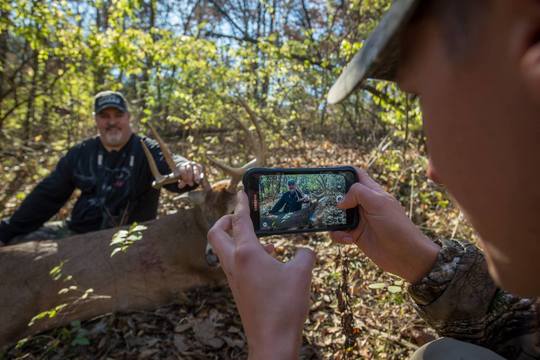
The wait is almost over… are you ready?
We know you want to you learn your way, and we’ve got you
covered. Want the full regulations? You can find them here. Want a handy pocket
guide to take with you in the field? Follow this link! Still have some questions?
Our FAQ will help.
Looking
to learn on the go? Check out Wild Wisconsin. Watch when you want, where you
want:
Already
at deer camp and looking for some in-depth deer hunting info? Check out these
“Off the Record” podcasts:
All
segments and podcasts, along with wild game recipes and much more, can be
found at dnr.wi.gov, keywords “Wild Wisconsin.”
|
|
Registering
your deer has never been easier!
Got your deer? Use GameReg to quickly and easily register it and enjoy your time at deer camp. Or if you, like many of us, like to take your deer into town to share your experience with friends, there are registration stations throughout Wisconsin that will provide a telephone or computer to register your deer. The tradition hasn't gone anywhere, we’ve just given you more options!
Get
your deer tested for CWD!
Wisconsin’s deer herd needs your help – find a sampling location or drop-off kiosk near you at dnr.wi.gov keywords “CWD sampling.” Looking for more info regarding CWD? We have a new fact sheet that will help you learn more.
Wisconsin
is a safe place to enjoy the outdoors thanks to hunters who always put safety
first
Our state is a safe place to hunt, plain and simple. Check out our safety tips page to help ensure you and others have a safe season. Wisconsin’s wardens are hard at work year round to keep hunting safe – you can call or text our anonymous hotline to report a violation at 1-800-847-9367 or report a violation online.
We
all remember our first time in the woods, and our first harvest or experience
certificate will help you cherish these memories forever! Search keywords “first certificates” and get one of your own!
Follow
DNR on Facebook, Instagram, YouTube and Twitter pages for updates from the field and
more helpful tips throughout deer season. Share your photos, videos and
stories from the field with hunters from throughout Wisconsin!
For more information
regarding deer hunting in Wisconsin, visit dnr.wi.gov and search keyword
"deer."
|

Friday, November 17, 2017
OPENING DAY INFORMATION FOR ALL YOU DEER HUNTERS == ROGER'S OUTDOOR NEWS

Thursday, November 16, 2017
OUTDOOR NEWS FOR THE WEEK OF OPENING DEER HUNTING SEASON
Outdoor Report
November 16, 2017
Cooler temperatures and light to moderate snowfall, along with wind will likely still impact opening day, particularly in the north. In southern and central areas, temperatures are forecast to be above freezing and most of the snow cover has disappeared, adding its own challenge. There was an ample drop of mast this year and now that most crops have been harvested, animals will be concentrating on those acorns. The lack of crop cover should make spotting easier.
There are some big changes this year [PDF], including hunters are no longer required to attach a tag to their animal. However, the deer still must be registered. For more information search the DNR website for keyword “deer.”
There are antlerless deer bonus carcass tags available for purchase across the state, in many counties on both public and private land; search the DNR website for antlerless deer tag availability. Hunters can also check the DNR website for locations and times where they can have deer tested for chronic wasting disease by searching for “CWD sampling” and clicking on the sampling/registration station database link.
And people visiting Wisconsin state parks, forests and recreation areas during the nine-day gun deer season are reminded that many parks opened for hunting as of Nov. 15. Park and forest visitors should wear blaze orange or other brightly colored clothing. Some properties offer loaner blaze-orange vests at visitor stations. To find maps of what areas within park properties are closed to hunting or to fine properties where hunting is prohibited, search for keywords “hunting state parks.”
With last week’s cold snap, some lakes had started to freeze over but it’s mostly skim ice and not safe yet for ice fishing. A warm up and rain in the forecast could melt ice that has formed. However open water fishing has continued to be good on Lower Green Bay and the Fox River for those who have not put their boats away yet. There were solid catches for musky with anglers reporting fish over 48 inches on the bay and excellent fishing for walleye and whitefish on the Fox. Those whitefish are pushing into the rivers to begin their spawning run and will remain in the river for the majority of winter, feeding on the abundant forage the Fox River has to offer.

Fisheries personnel electroshocked a stretch of the Brule River to capture steelhead this week. The fish are measured, weighed, and a few scales are taken. The fish are then returned to the river.
Photo Credit: DNR
Opportunities for viewing sandhill cranes have been great with hundreds being seen staging in farm fields through southern and central Wisconsin. There has been an early influx of snowy owls into Wisconsin this year. You can learn more about our snowy owl irruption by searching dnr.wi.gov for keyword “snowy owls.”
CAPTIVE DEER ESCAPED FROM A DEER FARM, HUNTERS NEED TO HELP FIND IT
Hunters Asked to Report Ear Tagged Deer in Trempealeau
County
DATE: November 16, 2017CONTACT: Mark Rasmussen, DNR Wildlife Biologist, 608-685-6222
ALMA, Wis. -- The Department of Natural Resources is requesting the help of deer hunters in western Trempealeau County to be on the lookout for ear-tagged white-tailed deer that escaped from a local captive deer facility.
Two bucks are known to have escaped the captive deer facility in late October through an open gate. An unknown number of antlerless deer that were housed in the same facility may have escaped at the same time. One of the escaped bucks was shot by a hunter on private land several miles north of the captive deer facility on Nov. 1, 2017. The other buck known to have escaped is likely to have a blue ear tag.
The department is asking residents and landowners to check trail camera images for any ear-tagged deer and notify the DNR if they record any images of ear-tagged deer or if they observe any in the wild. In addition, if a hunter bags a deer and subsequently discovers the deer is marked with an ear tag, the hunter should contact the department. While yellow plastic ear-tags are most common, please report any deer tagged with any size, shape or color of ear-tag.
Anyone who sees an ear-tagged deer or harvests a deer with an ear tag in the wild, should contact the DNR Call Center at 1-608-267-7691, select option 3, for additional instructions.
HOW TO PREPARE YOUR VENISON
Identifying and Cooking Cuts of Venison
0
Harvesting a deer secures a sizeable supply of delicious red meat. How that meat is handled and cooked, and by whom, depicts how well it will serve up as the main entrée next time you invite guests over for a wild-game dinner.

If you’ll be transporting your deer to a suitable skinning and butchering location, remove the entrails by field-dressing your deer immediately after the kill. Of course, field-dressing is unnecessary if you’ll be packing out the meat.
Of course, few hunters are experts at butchering and processing deer. So, most take the easy route – they drop harvested deer off at a meat-processing plant. In the past, I’ve done this myself, but these questions invariably linger: How is the meat handled? How sanitary are the tools and surfaces the meat contacts? Is the meat handled along with another hunters’ venison, or is each deer processed individually? For that matter, am I even getting my own deer meat back, or am I simply getting “venison?”
The thought of getting another hunter’s venison, or even a portion of it, repulses me. I handle deer meat as pridefully and carefully as possible because, again, how meat is handled determines its table quality.
If the questions I referenced above haunt you each time you take a deer to the butcher, perhaps you should consider butchering and processing your own deer from now on.
Getting Started
If you’ve never done it, removing usable meat chunks from a deer carcass can seem confusing. However, you need not be an expert to do it. First, you must know what cuts are good for specific dishes in order to harvest them correctly and in the right portions. Then, you must know where each cut is located.
If you’ve never done it, removing usable meat chunks from a deer carcass can seem confusing. However, you need not be an expert to do it. First, you must know what cuts are good for specific dishes in order to harvest them correctly and in the right portions. Then, you must know where each cut is located.
Let’s review the cuts, where each is located, and my favorite recipe for each cut.
Loins (AKA — Backstraps)
The loins are the most highly accoladed venison cut, and for good reason. These are the muscle bands that set along either side of the spine, extending from the bottommost vertebra up to the scapula. To harvest each one, cut along the spine starting by the scapula and working down to the last vertebra. Then, simply pull on the band of muscles with one hand and cut it free from the backbones with a sharp knife.
The loins are the most highly accoladed venison cut, and for good reason. These are the muscle bands that set along either side of the spine, extending from the bottommost vertebra up to the scapula. To harvest each one, cut along the spine starting by the scapula and working down to the last vertebra. Then, simply pull on the band of muscles with one hand and cut it free from the backbones with a sharp knife.

A venison loin is cut into steaks. Cut across the meat grain to ensure tender, non-chewy loin steaks.
My favorite way to prepare venison loins is a recipe called chicken fried steak. Slice the loin into ¼-inch-thick medallions, then roll them in flour. Next, dunk them in an egg/milk mixture, then roll in Ritz cracker crumbs seasoned with a salty/peppery steak seasoning. Fry in butter on medium/high heat until done to your liking.
Tenderloins
The aptly named tenderloins are found inside the deer’s chest cavity along either side of the spine. If you’ve field-dressed your deer, then you can easily nab these tasty gems from inside the chest cavity. If you’re caping, quartering and packing out your deer, then you can cut in through the back behind the rearmost rib. Insert your fingers and feel for the bands of muscles. Work carefully with your knife and fingers to retrieve the tenderloins without the hassle of field-dressing duties.
The aptly named tenderloins are found inside the deer’s chest cavity along either side of the spine. If you’ve field-dressed your deer, then you can easily nab these tasty gems from inside the chest cavity. If you’re caping, quartering and packing out your deer, then you can cut in through the back behind the rearmost rib. Insert your fingers and feel for the bands of muscles. Work carefully with your knife and fingers to retrieve the tenderloins without the hassle of field-dressing duties.

Becca McDougal, the author’s wife, cuts venison into chunks sized appropriately for the McDougal’s meat grinder.
Tenderloins also make delicious chicken fried steak, but sometimes there’s nothing like a tenderloin cooked on a charcoal grill with Weber Chicago Steak Seasoning. I sear the outside edges, then let the tenderloin cook until only slightly pink in the middle.
Roasts
The roast is the upper portion of the rump, although a roast can be cut into steaks or even ground, if you wish. Discreet tissue lines separate bands of muscles on the hind quarters, and any sizeable chunk of red meat you harvest from the hind quarters will make an excellent roast. Work your knife carefully along the tissue lines to remove roasts in large chunks.
The roast is the upper portion of the rump, although a roast can be cut into steaks or even ground, if you wish. Discreet tissue lines separate bands of muscles on the hind quarters, and any sizeable chunk of red meat you harvest from the hind quarters will make an excellent roast. Work your knife carefully along the tissue lines to remove roasts in large chunks.
My favorite way to prepare a roast is to place it in a slow cooker with carrots and potatoes. I cook on low heat until the meat is fall-apart tender. By then, the potatoes and carrots might be overcooked, so consider adding them to the slow cooker two hours after you add the roast. Incorporate savory seasonings, and you’ll have a hearty and fulfilling dinner. I occasionally cut large roasts into 1-inch cubes to be slow cooked in gravy for a beef-tip equivalent served over mashed spuds.
Steaks
The band of muscles between the hock and the rump roasts on the rear portion of the back leg is considered the “steak.” The front portion of the back leg is considered the sirloin steak. Once these chunks are harvested, slice across the muscle grain into steaks of desired thickness.
The band of muscles between the hock and the rump roasts on the rear portion of the back leg is considered the “steak.” The front portion of the back leg is considered the sirloin steak. Once these chunks are harvested, slice across the muscle grain into steaks of desired thickness.
Steaks can be grilled or pan-fried, but in my opinion, nothing beats a charcoal-grilled steak seasoned with a Chicago Steak Seasoning or equivalent.
Shanks
The tendon-strung muscles on the forelegs can be used, but are good for little other than stew meat. Once deboned, cut into cubes, then cook via slow cooker until the tendons loosen completely and the meat falls apart when stabbed with a fork.
The tendon-strung muscles on the forelegs can be used, but are good for little other than stew meat. Once deboned, cut into cubes, then cook via slow cooker until the tendons loosen completely and the meat falls apart when stabbed with a fork.
Scrap
Within reason, I harvest as much lean scrap meat as possible. This can be ground, or it can be turned into jerky or sausage. Most of it comes from the neck, brisket and front shoulders. Remember, any red scrap counts toward the final weight of meat harvested.
Within reason, I harvest as much lean scrap meat as possible. This can be ground, or it can be turned into jerky or sausage. Most of it comes from the neck, brisket and front shoulders. Remember, any red scrap counts toward the final weight of meat harvested.

The author sends chunked venison through a Weston meat grinder and directly into a 1 ½-pound Cabela’s burger bag.
I use a Weston electric meat grinder to grind all scrap meat at home. I don’t end up with enough scrap meat for a year supply of ground venison, so I normally grind up most of the roast meat, too. My wife and I use ground venison more than any other type of meat, so I try to have as much on hand as possible.
We occasionally make jerky from ground venison using a jerky gun, but we also make lots of burgers, taco meat, chili and meatloaf with it.
Closing Thoughts
As a final caution, I trim fat, tendons and silver skin from all cuts (even the scrap meat). This avoids a “tallowy” flavor and ensures the meat is as tender as possible. Always keep the meat cooled, and be sure to wrap cuts in freezer paper, or store them in vacuum-sealed bags to deflect freezer-burn.
As a final caution, I trim fat, tendons and silver skin from all cuts (even the scrap meat). This avoids a “tallowy” flavor and ensures the meat is as tender as possible. Always keep the meat cooled, and be sure to wrap cuts in freezer paper, or store them in vacuum-sealed bags to deflect freezer-burn.

The McDougals use ground venison for burgers, taco meat and meatloaf. These 12 packages of ground venison were used up within a few months.
As you butcher, be sure to use a clean knife (not the one you field-dressed the animal with). Remove the hide quickly and keep the meat in a cool, dry environment. Always handle meat on sanitary surfaces, and get the meat frozen as soon as it’s packaged properly.
Most states have a minimum legal requirement for meat that must be harvested from game animals. Be sure to abide by the laws.
I’m not an expert butcher, but I’ve saved hundreds of dollars by butchering dozens of my own deer, plus I get the peace of mind knowing how the meat was handled from field to table. You can have that same satisfaction by butchering and cooking your own venison.
For a detailed illustration of cuts, please visit here.
Related posts:
Read more: http://www.bowhuntingmag.com/how-to/identifying-and-cooking-cuts-of-venison/#ixzz4yd8PiQlx
START PLANNING FOR THE DEER FEST THIS FALL OF 2018
|
||||||||||||||
|


Subscribe to:
Comments (Atom)